Many parents instinctively prioritize portraits during babyhood and the early toddler years. Those milestones feel obvious. But somewhere around ages eight, ten, or twelve, families often begin to wonder if their children are “past the point” of needing portraits.
The truth is, they couldn’t be further from it.
At ten years old, children are still wonderfully young—yet they’re already changing quickly. Faces begin to refine. Expressions grow more thoughtful. Personality becomes more visible in quiet ways. This stage holds a rare balance between innocence and emerging maturity, making it one of the most meaningful ages to preserve.
Years from now, parents don’t look back and see a nearly-grown child. They see how small their ten-year-old truly was.
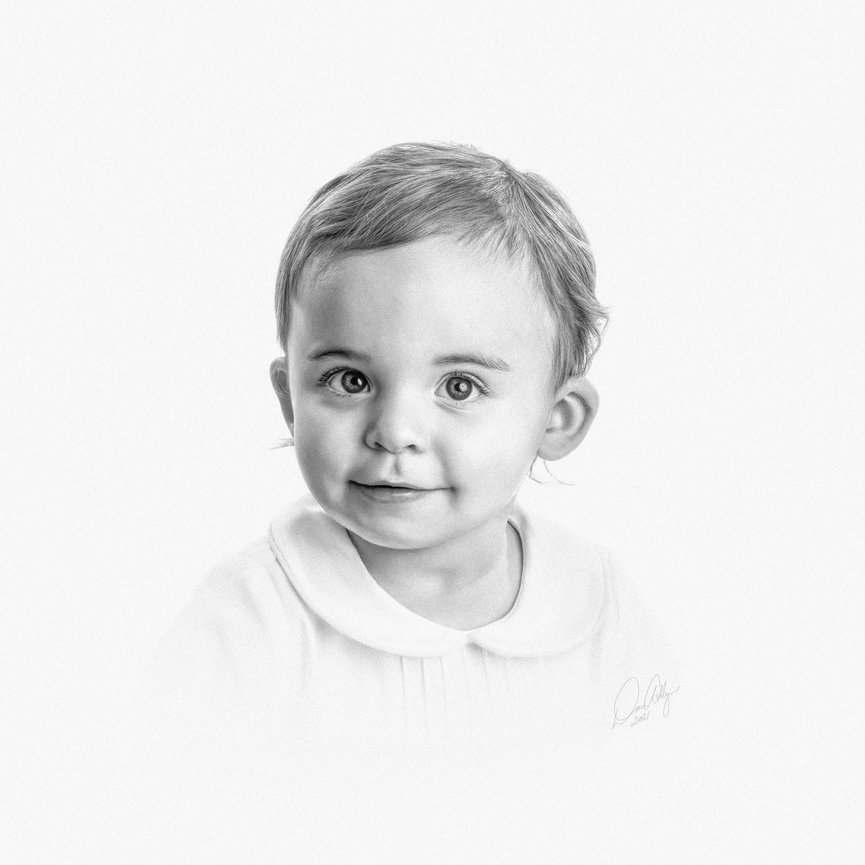
This charcoal heirloom portrait of a ten-year-old boy reflects exactly why older childhood deserves to be documented with intention. His expression is soulful and wide-eyed—open, thoughtful, and unmistakably childlike. Charcoal allows for subtle depth and softness, emphasizing emotion while maintaining a classic, understated aesthetic.
Just like baby portraits, this artwork preserves a fleeting season. The difference is that here, personality plays an even larger role. At this age, children bring their own presence into the portrait, creating artwork that feels deeply personal.
Many families assume that once baby milestones have passed, portraits become optional. Life gets busy. School schedules fill calendars. Children feel “older,” so parents postpone.
But these years move just as quickly—often faster.
By the time children enter their teens, parents frequently realize how much they wish they had captured this quieter middle chapter. The gap between toddler portraits and high school seniors can span nearly a decade if left unattended.
A portrait of a ten-year-old holds just as much significance as one created at six months or two years. Each age carries its own story, expressions, and emotional texture. When preserved as fine art, these moments become part of a family’s visual history.
This charcoal portrait was created using museum-grade materials and finished in a timeless frame, designed to live on the wall alongside earlier portraits—continuing the narrative of childhood rather than ending it prematurely.
Children don’t suddenly grow up overnight. It happens in quiet increments. One day you’ll look back at photographs from age ten and realize how young they truly were.
Heirloom portraits exist to honor those in-between years—the ones that feel ordinary while you’re living them, but extraordinary once they’ve passed.
If you’ve been waiting because your child feels “too old,” consider this your reminder: they’re still very much in the heart of childhood.
Leave a comment
0 Comments